交易
·
·

交易
比特币与以太坊:您在2026年应该购买哪个?
3 min read
Contents
01
Bitcoin vs. Ethereum: Which Should You Buy in 2026?
02
Bitcoin and Ethereum at a Glance
03
What Bitcoin Was Designed to Do
04
What Ethereum Was Designed to Do
05
Key Differences Between Bitcoin and Ethereum
06
Why Bitcoin and Ethereum Are Often Compared
07
Bitcoin vs Ethereum in 2026: How People Typically Frame the Choice
08
Common Misconceptions
09
Final Thoughts


01
Bitcoin vs. Ethereum: Which Should You Buy in 2026?
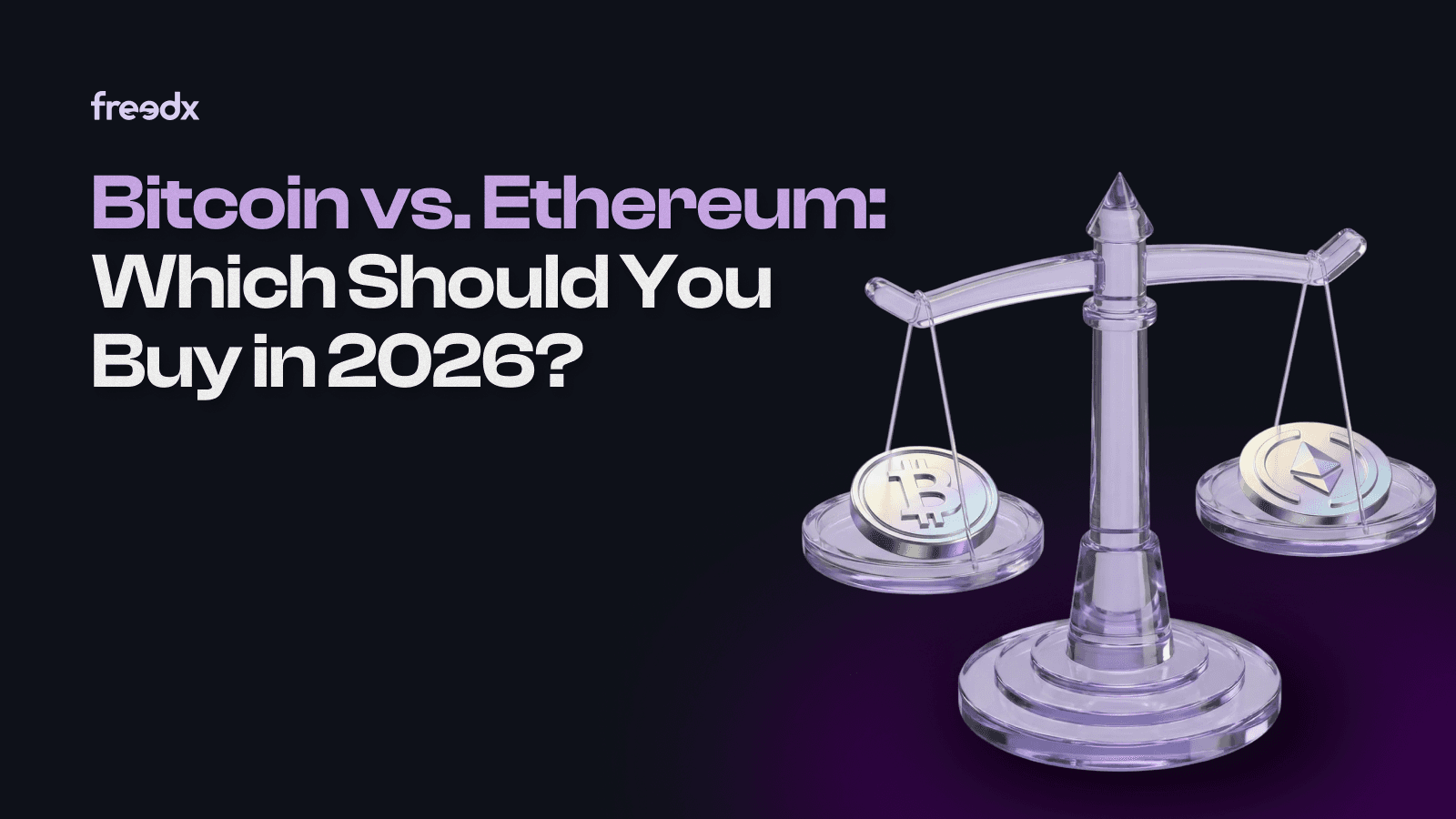
比特币和以太坊是按市值计算的两种最大加密货币,但它们的创建目的不同,并且在市场上的表现也不同。当人们在2026年比较比特币和以太坊时,他们通常试图理解这些资产的不同之处、价格驱动因素以及为什么它们常常一起被讨论。
本文解释了比特币和以太坊之间的核心差异,而不假设特定的投资方法。
比特币和以太坊一览
比特币和以太坊都是去中心化的区块链,但它们在加密生态系统中扮演着不同的角色。
比特币主要被设计为一种固定供应的数字资产。以太坊被设计为支持应用程序、交易和智能合约的可编程网络。
由于这一差异,人们购买、持有或交易BTC和ETH的原因并不相同。
比特币被设计用于什么
比特币的创建是为了实现点对点的价值转移,而不依赖于传统金融机构。其定义特征是2100万枚硬币的固定供应,由其协议强制执行。
通常与比特币相关联的关键特征:
固定和可预测的供应
全球市场的高流动性
与长期持有的强相关性
对更广泛的加密市场情绪的影响
比特币的价格行为通常与宏观条件、流动性和整体市场风险偏好有关。比特币的波动经常影响整个加密市场。
以太坊被设计用于什么
以太坊的创建是为了通过智能合约实现可编程交易。这使得去中心化的应用程序得以存在,包括金融平台、稳定币和代币资产。
通常与以太坊相关联的关键特征:
由应用程序和交易驱动的网络使用
进行交易费用和计算所需的ETH
持续的网络升级和可扩展性改进
与链上活动的密切关系
以太坊的价格行为通常受到网络使用、应用增长和生态系统发展的变化影响。
比特币和以太坊的关键区别
比特币和以太坊之间的区别并不在于哪个更好,而在于它们各自代表的东西。
目的
比特币主要作为一种稀缺的数字资产运作
以太坊作为一个可编程网络和结算层运作
供应模型
比特币有一个固定的最大供应
以太坊没有固定的供应上限,但发行受到网络机制的影响
市场行为
比特币通常作为市场的参考点
以太坊通常反映加密应用生态系统内的活动
波动性
比特币通常表现出较低的相对波动性
以太坊通常对生态系统发展表现出更高的敏感性
为什么经常比较比特币和以太坊
比特币和以太坊之所以被比较,是因为它们主导市场流动性和关注度。尽管它们扮演着不同的角色,通常仍然被用作更广泛的加密市场的基准。
在许多市场周期中,比特币引领主要波动,而以太坊则随之其自身的动态与使用和采用相关。
2026年比特币与以太坊:人们通常如何构建选择
在2026年,比特币和以太坊之间的比较通常分为几个类别:
稀缺性与实用性
市场锚点与网络活动
宏观敏感性与应用程序驱动的需求
常见误解
一些常见的误解包括:
假设比特币和以太坊可以互换
期望两种资产始终同步移动
将以太坊视为一种货币,而不是网络资产
认识到这些区别有助于阐明为什么资本流动在很长时间内在BTC和ETH之间变化。
最后的思考
2026年比特币与以太坊的比较是两个根本不同设计之间的比较。比特币反映了稀缺性和在加密市场中的长期定位。以太坊反映了活动、使用和应用需求。
它们共存是因为它们解决不同的问题,而这种差异持续影响着它们的讨论、交易和估值方式。
02
Bitcoin and Ethereum at a Glance
Bitcoin and Ethereum are both decentralized blockchains, but they serve different roles within the crypto ecosystem.
Bitcoin is primarily designed as a digital asset with a fixed supply. Ethereum is designed as a programmable network that supports applications, transactions, and smart contracts.
Because of this difference, the reasons people buy, hold, or trade BTC and ETH are not the same.
03
What Bitcoin Was Designed to Do
Bitcoin was created to enable peer to peer value transfer without relying on traditional financial institutions. Its defining feature is a fixed supply of 21 million coins, enforced by its protocol.
Key characteristics commonly associated with Bitcoin:
Fixed and predictable supply
High liquidity across global markets
Strong association with long term holding
Influence over broader crypto market sentiment
Bitcoin’s price behavior is often linked to macro conditions, liquidity, and overall market risk appetite. Movements in Bitcoin frequently impact the rest of the crypto market.
04
What Ethereum Was Designed to Do
Ethereum was created to allow programmable transactions through smart contracts. This enables decentralized applications, including finance platforms, stablecoins, and tokenized assets.
Key characteristics commonly associated with Ethereum:
Network usage driven by applications and transactions
ETH required for transaction fees and computation
Ongoing network upgrades and scalability improvements
Close relationship with onchain activity
Ethereum’s price behavior is often influenced by changes in network usage, application growth, and ecosystem development.
05
Key Differences Between Bitcoin and Ethereum
The difference between Bitcoin and Ethereum is not about which is better, but about what each represents.
Purpose
Bitcoin functions primarily as a scarce digital asset
Ethereum functions as a programmable network and settlement layer
Supply Model
Bitcoin has a fixed maximum supply
Ethereum does not have a fixed supply cap, but issuance is influenced by network mechanics
Market Behavior
Bitcoin often acts as a market reference point
Ethereum often reflects activity within the crypto application ecosystem
Volatility
Bitcoin generally shows lower relative volatility
Ethereum often shows higher sensitivity to ecosystem developments
06
Why Bitcoin and Ethereum Are Often Compared
Bitcoin and Ethereum are compared because they dominate market liquidity and attention. They are commonly used as benchmarks for the broader crypto market, even though they serve different roles.
In many market cycles, Bitcoin leads major moves while Ethereum follows with its own dynamics tied to usage and adoption.



07
Bitcoin vs Ethereum in 2026: How People Typically Frame the Choice
In 2026, comparisons between Bitcoin and Ethereum usually fall into a few categories:
Scarcity versus utility
Market anchor versus network activity
Macro sensitivity versus application driven demand
08
Common Misconceptions
Some common misunderstandings include:
Assuming Bitcoin and Ethereum are interchangeable
Expecting both assets to move identically at all times
Treating Ethereum purely as a currency rather than a network asset
Recognizing these distinctions helps clarify why capital flows shift between BTC and ETH over time.
09
Final Thoughts
Bitcoin vs Ethereum in 2026 is a comparison between two fundamentally different designs. Bitcoin reflects scarcity and long term positioning within crypto markets. Ethereum reflects activity, usage, and application demand.
They coexist because they solve different problems, and that difference continues to shape how they are discussed, traded, and valued.