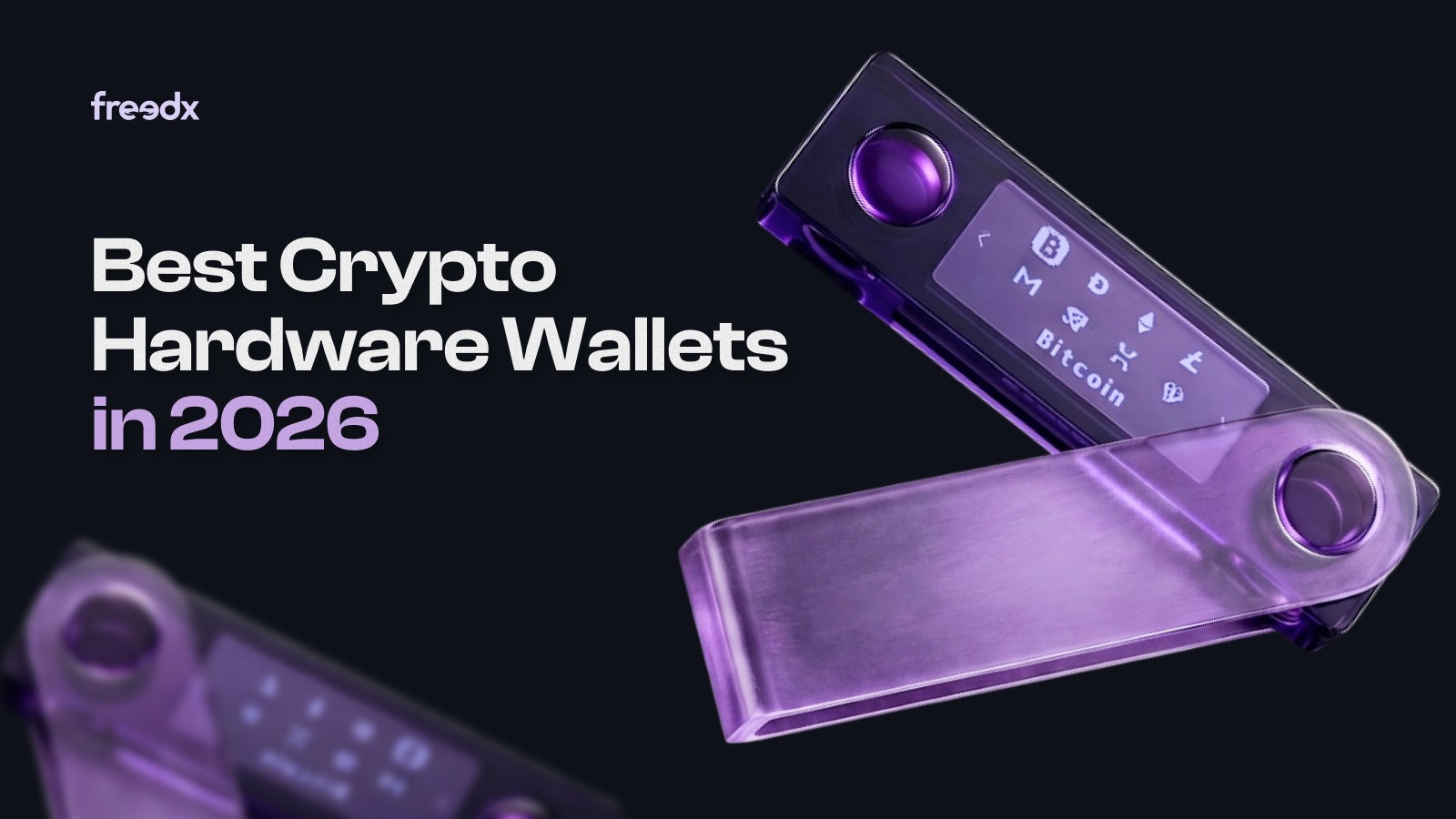
Crypto hardware wallets represent the gold standard for cryptocurrency security in 2026. These physical devices store your private keys offline, providing an impenetrable barrier against online threats that have become increasingly sophisticated. As the crypto market matures and digital asset ownership becomes mainstream, understanding the best crypto hardware wallets available today is crucial for protecting your investments.
Unlike software wallets or keeping funds on exchanges, hardware wallets ensure your private keys never touch an internet-connected device. This "cold storage" approach eliminates the risk of remote hacking, malware, and most forms of cyber attacks that plague the cryptocurrency space.
At Freedx, we believe security doesn't stop at the exchange. Whether you're actively trading or holding long-term, knowing where your assets are safest is part of being a smarter investor. That's why we put together this guide so you can trade with confidence and store with peace of mind.
Top Hardware Wallets in 2026: Feature Comparison
Ledger Nano X Plus
The Ledger Nano X Plus continues to dominate the hardware wallet market in 2026 with significant upgrades over previous models. This device supports over 5,000 cryptocurrencies and tokens, including all major assets available on Freedx. The enhanced Bluetooth connectivity allows secure mobile transactions, while the larger screen improves user experience for complex DeFi operations.
Key features include:
Enhanced security chip with quantum-resistant elements
500MB storage capacity for multiple apps
USB-C connectivity with improved durability
Advanced recovery phrase protection
Trezor Model T Pro
Trezor's flagship model has evolved significantly, featuring a larger touchscreen and improved processing power. The open-source nature of Trezor devices continues to appeal to security-conscious users who prefer transparent, auditable code. The Model T Pro excels in supporting advanced features like multi-signature setups and custom transaction signing.
Standout features:
4-inch color touchscreen
Support for over 8,000 cryptocurrencies
Shamir Backup for enhanced seed phrase security
Integration with popular DeFi protocols
KeepKey Genesis
KeepKey has made a strong comeback in 2026 with the Genesis model, focusing on simplicity and robust security. While supporting fewer cryptocurrencies than competitors, it covers all major assets and provides exceptional build quality with a premium metal construction.
Best Crypto Hardware Wallets for Different User Types
For Beginners
New crypto users should prioritize ease of use and comprehensive support resources. The Ledger Nano X Plus offers the most intuitive setup process and extensive documentation. Its mobile app integration makes it perfect for users transitioning from centralized exchange storage to self-custody.
For Advanced Traders
Professional traders require hardware wallets that support complex trading strategies and multiple asset management. The Trezor Model T Pro excels in this category with its advanced signing capabilities and extensive DeFi protocol support. Traders can securely interact with decentralized exchanges while maintaining cold storage security.
For Long-term Holders
Long-term investors benefit most from maximum security features and durability. The KeepKey Genesis provides bank-grade security with its tamper-evident design and robust construction, making it ideal for storing large amounts of cryptocurrency for extended periods.
Setting Up Your Hardware Wallet: Security Best Practices
Initial Setup Process
Proper setup is critical for hardware wallet security. Always purchase devices directly from manufacturers or authorized retailers to avoid tampering. During initialization, generate your recovery phrase on the device itself—never enter a pre-generated phrase or create one on a computer.
Recovery Phrase Management
Your recovery phrase is the master key to your cryptocurrency holdings. Store it in multiple secure locations using methods like:
Metal backup plates for fire and water resistance
Safe deposit boxes for institutional-grade security
Split storage across multiple trusted locations
Never store recovery phrases digitally or take photos
Regular Security Updates
Hardware wallet manufacturers regularly release firmware updates addressing security vulnerabilities and adding new features. Enable automatic notifications and promptly install updates through official channels only.
Integrating Hardware Wallets with Centralized Exchanges
While hardware wallets provide maximum security for long-term storage, many users maintain a hybrid approach, keeping active trading funds on trusted exchanges like Freedx for convenience and larger holdings in cold storage.
This strategy offers several advantages:
Immediate access to trading opportunities
Professional customer support for trading activities
Advanced trading features and liquidity
Secure cold storage for long-term holdings
When transferring funds between your hardware wallet and Freedx, always verify addresses multiple times and start with small test transactions for unfamiliar assets.
Cost Considerations and Value Assessment
Hardware wallets represent a one-time investment in security that pays dividends over time. Prices range from $100 to $300 for premium models, but this cost becomes negligible when protecting substantial cryptocurrency holdings.
Consider the total cost of ownership, including:
Initial device cost
Backup storage solutions (metal plates, safe deposit boxes)
Potential replacement costs for damaged devices
Time investment in proper setup and maintenance
Future-Proofing Your Hardware Wallet Choice
The cryptocurrency landscape evolves rapidly, and your hardware wallet should adapt to new technologies and standards. Look for devices with:
Regular firmware updates and active development
Support for emerging blockchain networks
Quantum-resistant security features
Strong manufacturer track record and community support
As the crypto ecosystem matures, hardware wallets will likely integrate more seamlessly with DeFi protocols, NFT marketplaces, and traditional financial services.
Conclusion
Selecting the best crypto hardware wallet in 2026 depends on your specific needs, technical expertise, and security requirements. Whether you choose the feature-rich Ledger Nano X Plus, the open-source Trezor Model T Pro, or the premium KeepKey Genesis, the key is implementing proper security practices and maintaining a balanced approach to cryptocurrency storage.